Cash on delivery has a flaw everyone knows and nobody discusses: the customer can say no at the door.
And when they do, you pay twice. Out and back. The product returns, sometimes damaged, often weeks later. Your cash went into transport for nothing.
Why people refuse
It is almost never a whim. Go through your last refusals and the same reasons come back:
- They do not remember ordering. Ten days passed between the order and the delivery without a word.
- The price is not what they expected. They had the product price in mind, not the shipping.
- They are not home. Nobody asked when they would be.
- They changed their mind. Nobody reminded them why they wanted it.
- It is not what they pictured. Size, colour, quantity: a detail never confirmed.
Look at that list again. Not one of those is a product problem. They are all conversations that never happened.
The silence between order and doorstep
That is the real hole.
The customer orders. Then nothing. For a week your business does not exist for them. On delivery day a stranger rings the bell holding a parcel and asking for money.
In between, they may have seen three other ads. They may have bought the same thing elsewhere. They may simply have forgotten.
One message at the right moment changes all of it. But across three hundred orders a week, who sends three hundred messages?
What a confirmation would do
A short exchange right after the order fixes almost everything:
- Restate what was ordered — product, size, colour, quantity.
- State the total price, shipping included. This is the easiest refusal cause to remove.
- Ask for the right time slot. "Morning or afternoon?"
- Confirm the address. A mistyped street is a wasted round.
Those four points take a salesperson thirty seconds. Multiplied by three hundred, they take two and a half hours a day. Which is why they never get done.
How WA ChatBox handles it
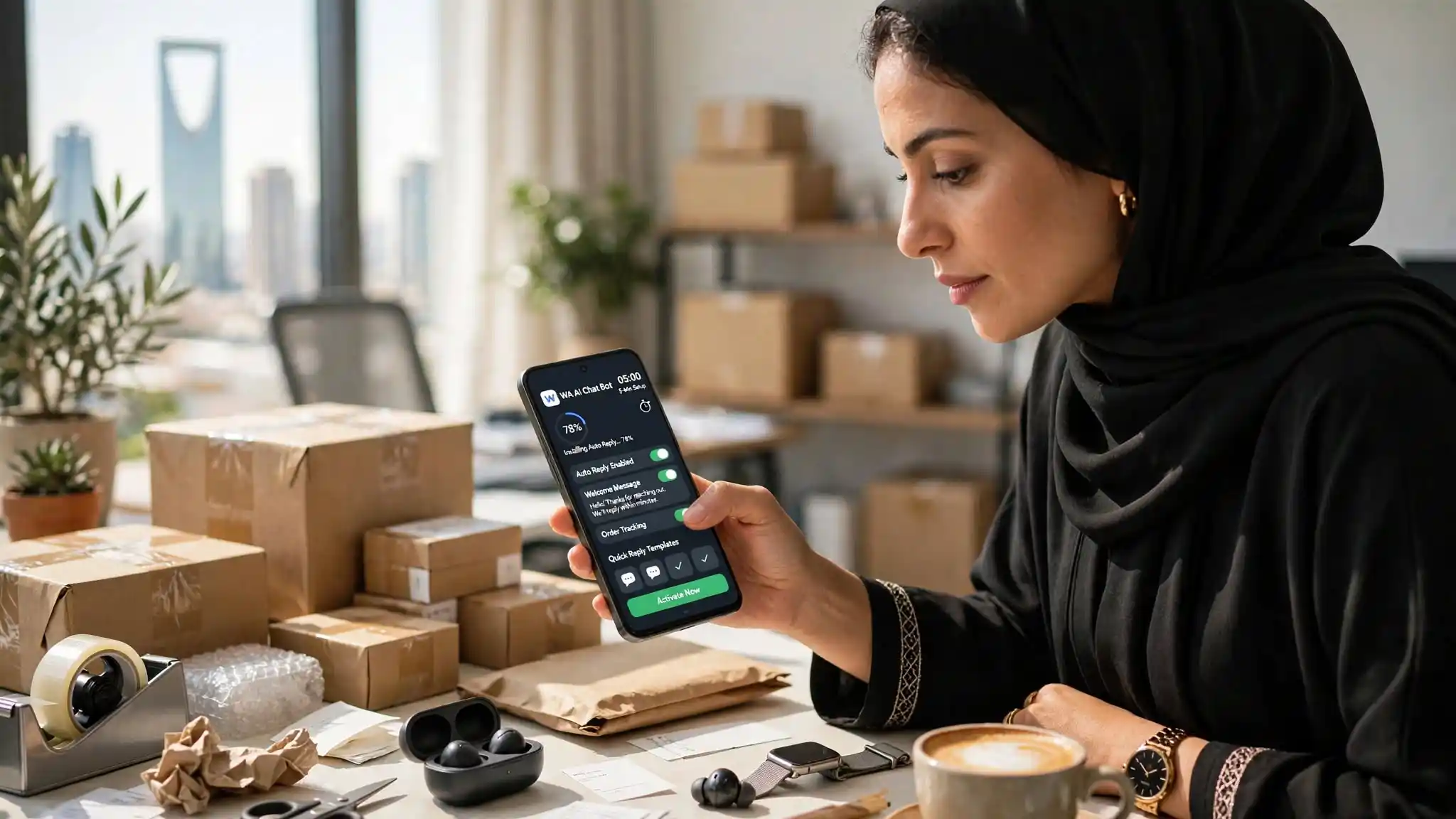
You write your information once: products, prices, shipping fees, lead times, areas covered. When a customer writes, the app answers from that text — immediately, not two hours later.
For order follow-up, what changes in practice:
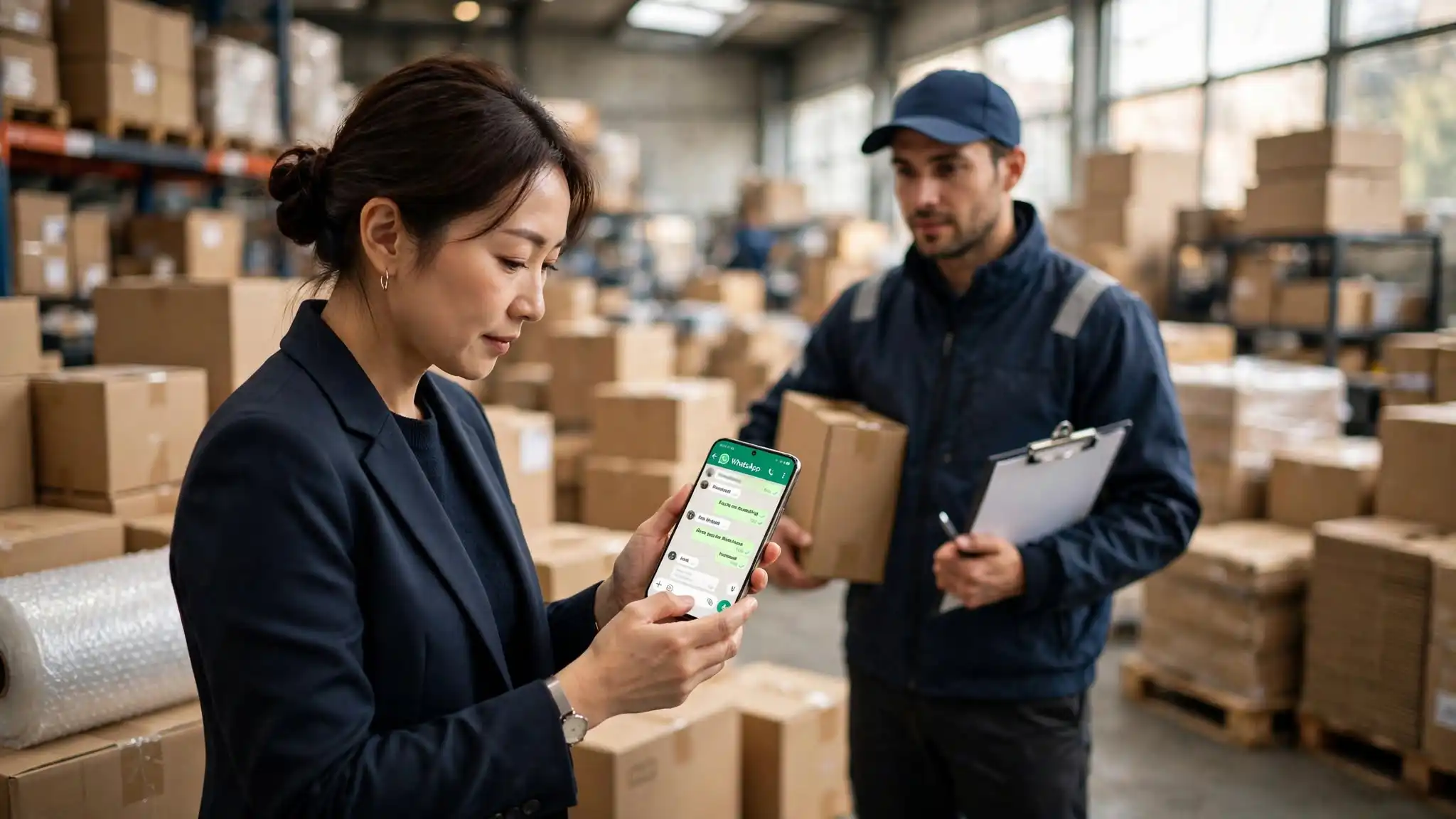
- Someone asking "when is my order coming?" gets your lead times at once, instead of waiting and doubting.
- Someone asking "how much with delivery?" gets the total — the question that prevents the refusal at the door.
- Someone writing at 11 p.m. gets an answer at 11 p.m.
- You keep a log of every conversation and step in the moment a case goes off script.
And because it replies in the customer's language, a buyer writing in Arabic does not have to decode English while confirming their address.
What it does not do
It does not send messages to your customers on its own: it answers the people who write to you. Bulk outreach needs a different tool, and WhatsApp's rules there are strict.
It runs on Android, with the phone switched on.
It has no connection to WhatsApp or Meta.
Where to start
Take last month's refusals and sort them against the list above. You will see immediately which piece of information was missing.
Write it into your business text. It is the cheapest change you can make this week.